

Completion of LIFE GRECABAT work in Spilaiovarathro Petasi Cave, at the POZAR Baths of Almopia
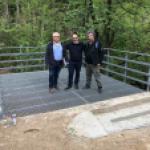
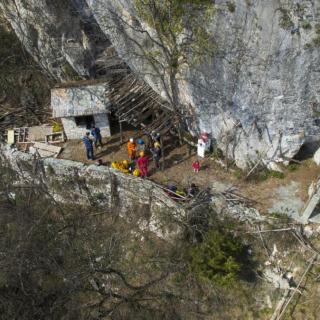
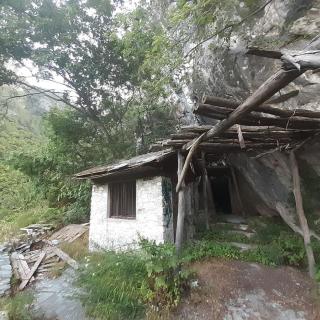
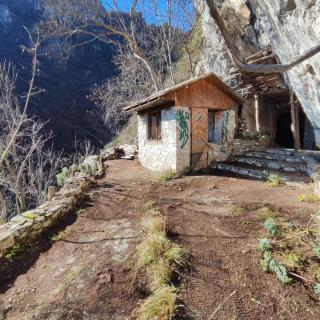
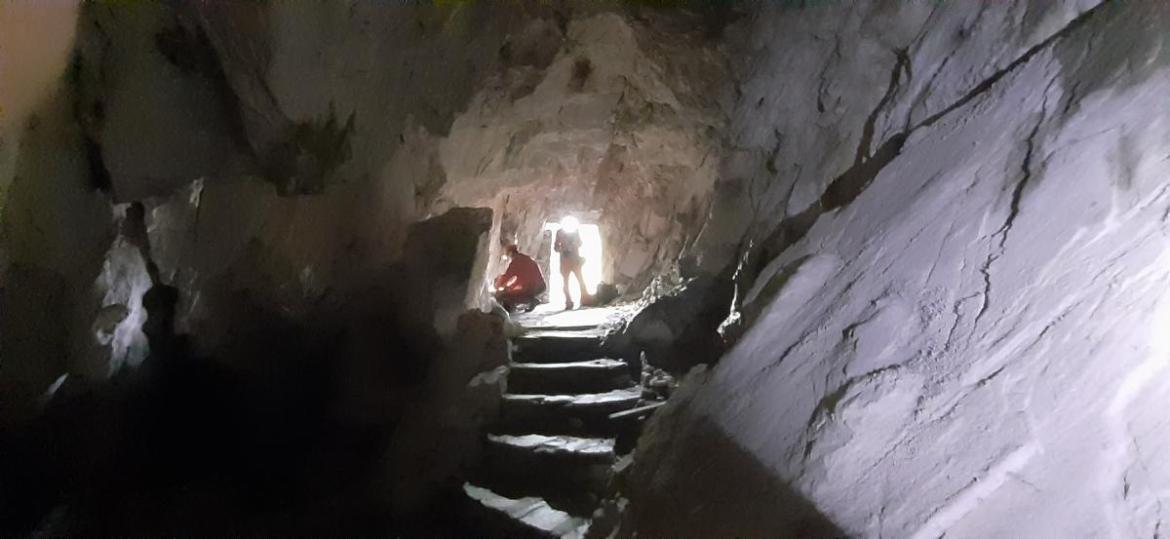
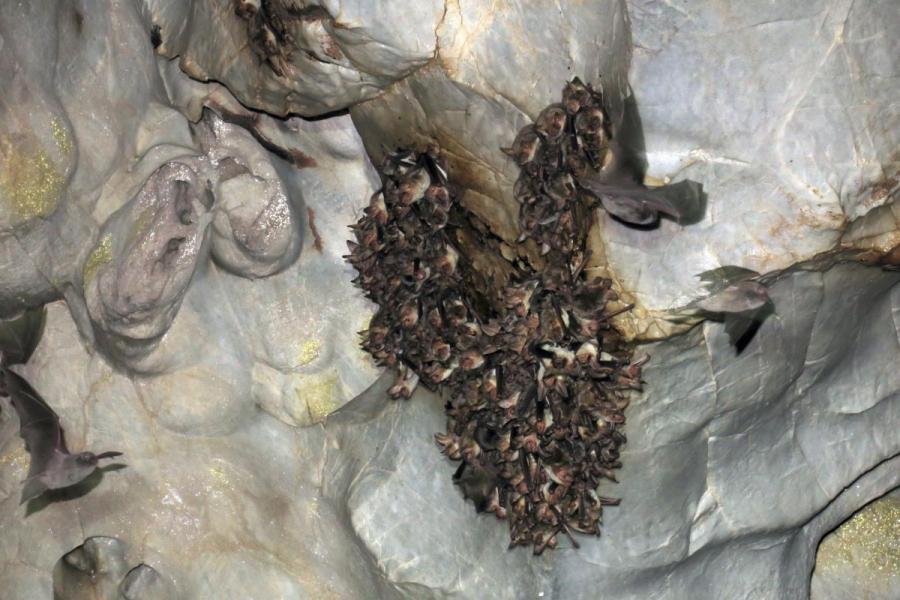
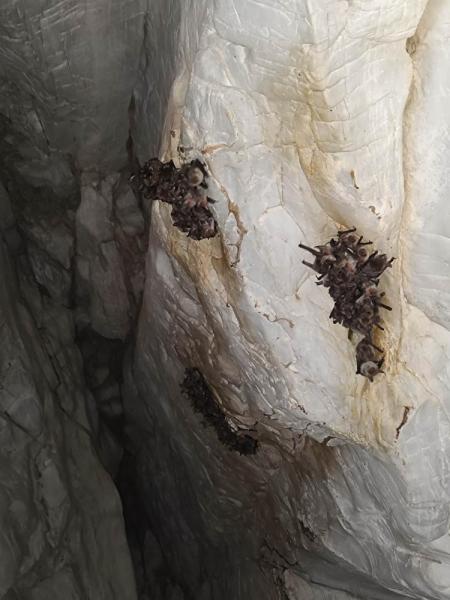
In March 2025, the work for the protection of the habitat and bat colonies in the Spilaiovarathro Petasi Cave at the POZAR Baths of Almopia, in the Prefecture of Pella, was completed, within the framework of Action C1 "Protection, restoration and management of important roosting sites for bats" of the LIFE GRECABAT Project.
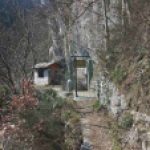
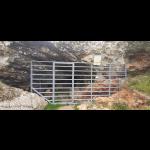
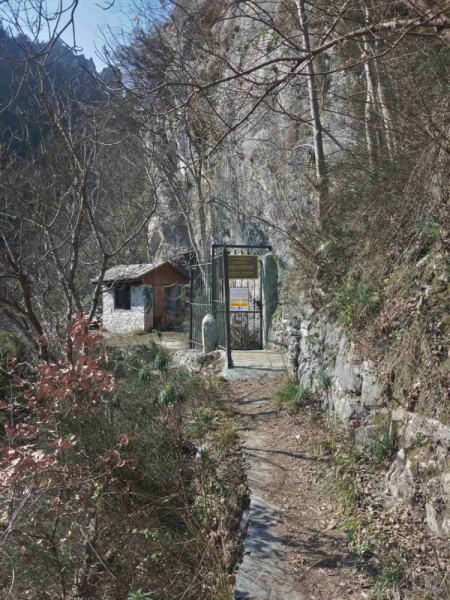
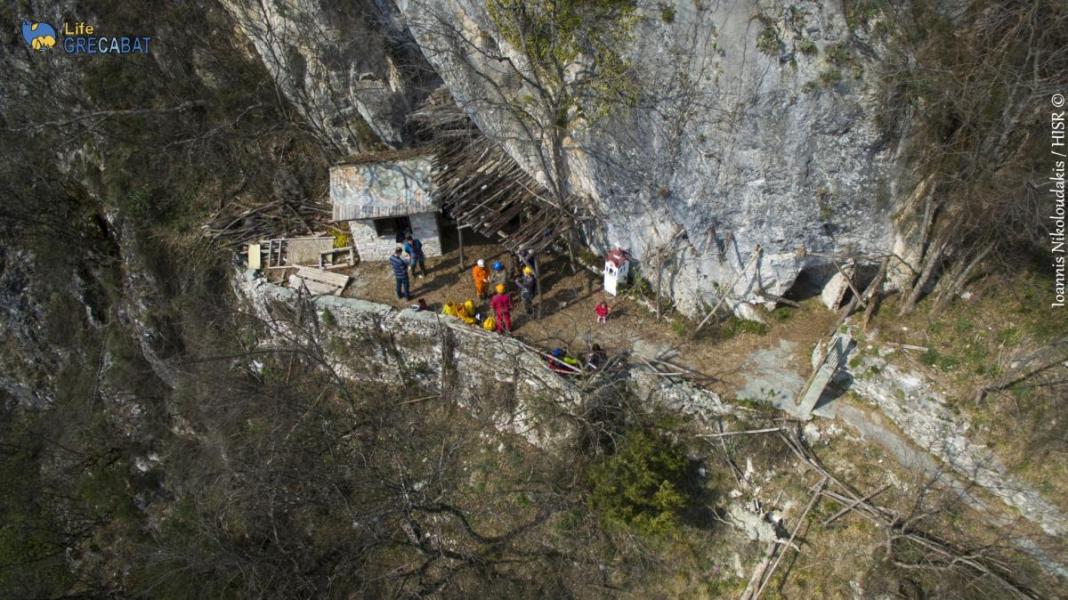
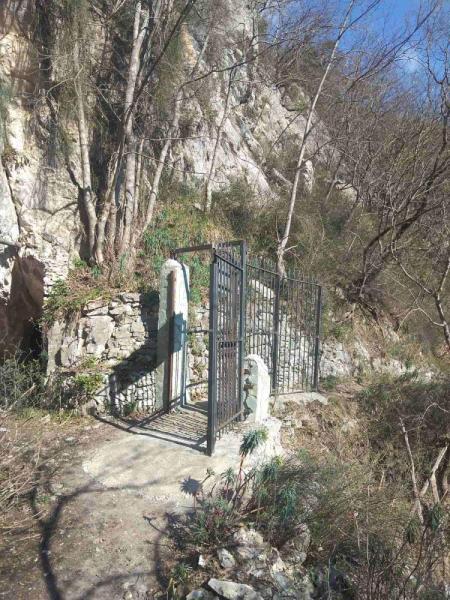
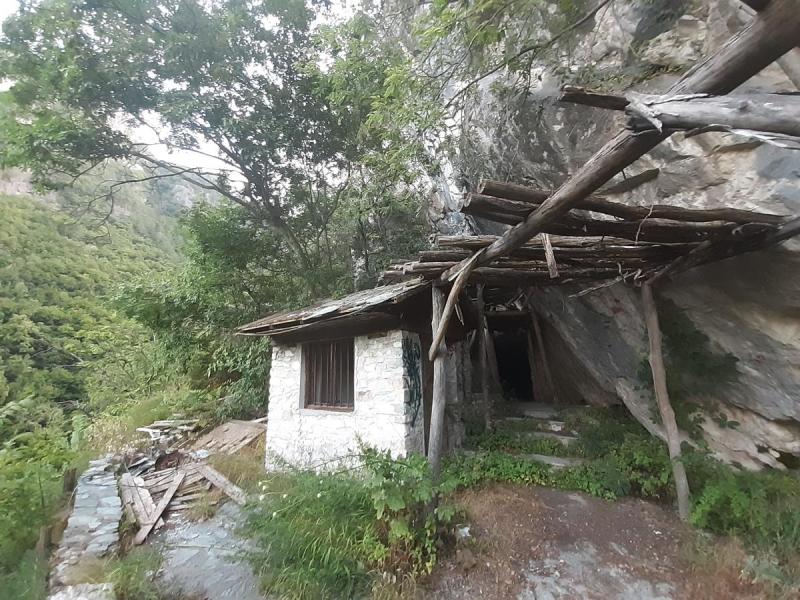
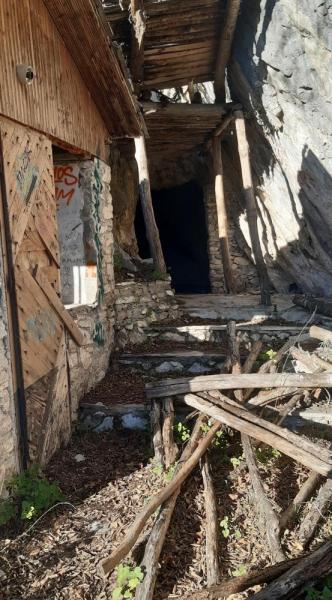
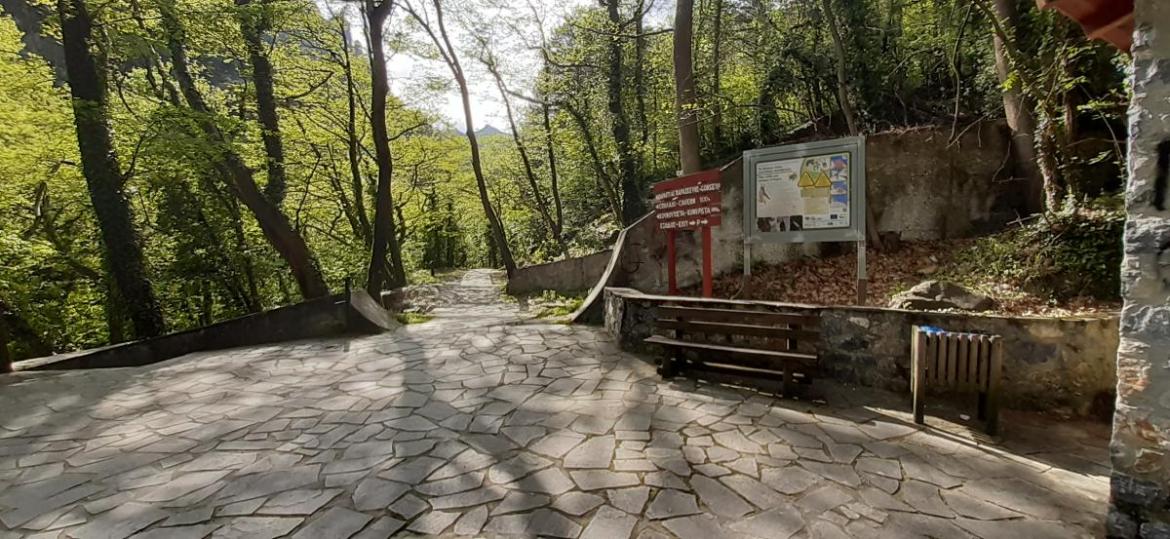
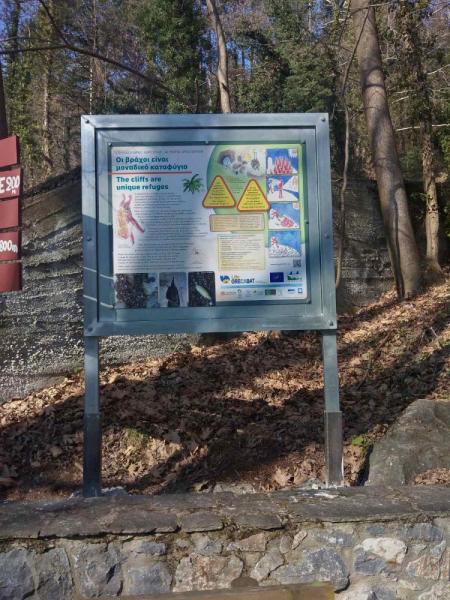
As part of the project, the external fence leading to the entrances of the Spilaiovarathro Cave was reinforced and environmental interpretation and signage signs (Action E1 "Environmental Interpretation Signs") were placed at the beginning of the path and on the external fence respectively. At the same time, in collaboration with the Municipal Enterprise of POZAR Baths, the cave and the surrounding area were cleaned of remnants of the old tourist arrangement and waste.
The project aimed to prevent the entry of unauthorized visitors in order to strengthen the protection of the habitat and the colonies of the cave, to prevent the possibility of an accident inside the cave, as well as to inform visitors about the importance and protection status of the habitat and the bats, as well as about the relevant rules of proper behavior.
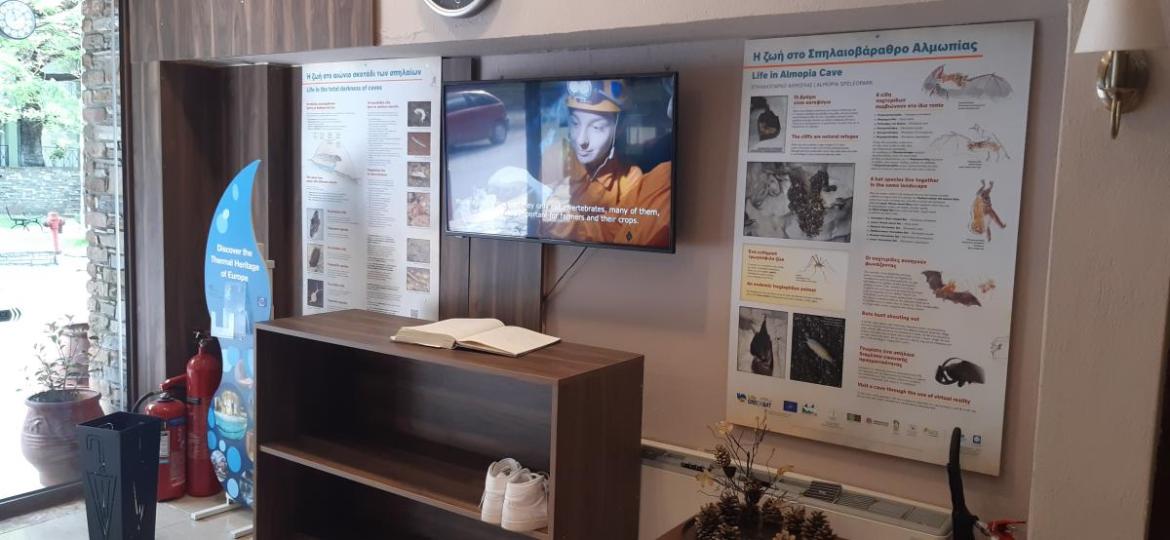
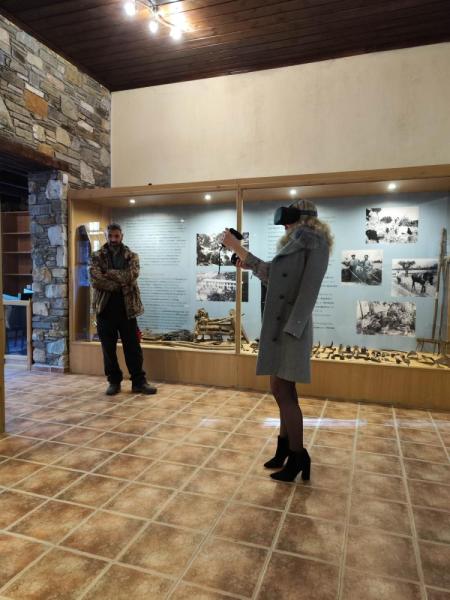
Since July 2023, two information panels and a screen with audiovisual material from LIFE GRECABAT's actions have been installed at the reception of the Alexandrio Hydrotherapy Center of POZAR Baths, while a VR device is available for a virtual cave exploration at the MUSEUM OF FOLKLORE & HISTORY of POZAR Baths.
Finally, after the project was decommissioned, a permanent cave monitoring system was installed in April 2025 as part of Action C2. The system records data on environmental conditions (temperature, relative humidity, CO2 concentration, etc.) through automatic sensors and monitors the bat activity with an infrared camera.
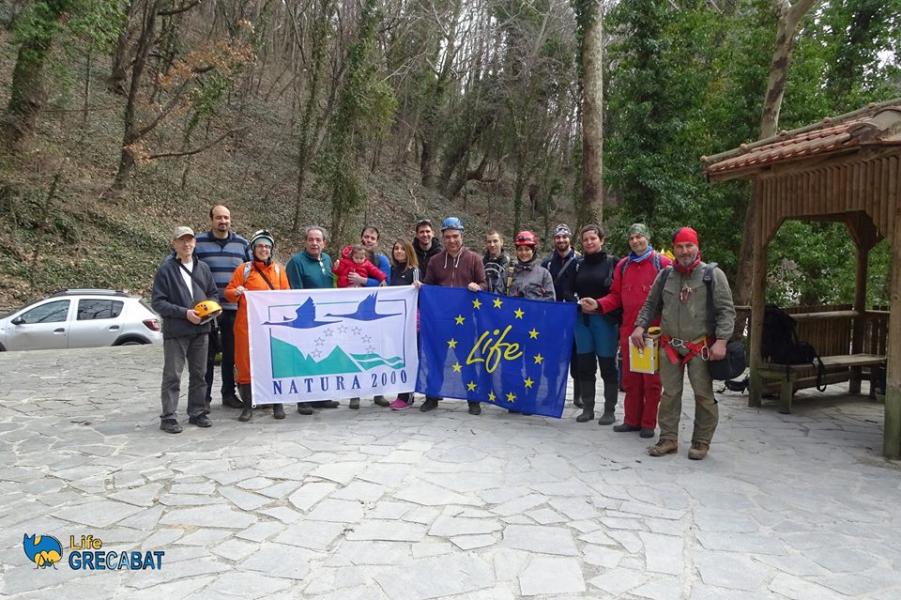
We warmly thank the contractor company GRANITIS ΙΚΕ and especially A. Karamanis for the design and implementation of the project, the Forestry Department of Aridaia and especially M. Tzampazi and V. Siaki for their supervision, the Ephorate of Paleoanthropology and Speleology and the archaeologist Z. Intze, as well as the Municipal Enterprise of POZAR Baths, the director N. Papagianopoulos and M. Ignantidou, and P. Ormani, A. Tanouri and I. Liasi for their valuable cooperation in the context of our Project.